Research

Bridging Physical AI and manufacturing deployment.

Advances in Physical AI are expanding what robots and manufacturing systems can do. But when a new task arrives at a manufacturing site, how do we know whether a system can perform it under the conditions that matter?

My research focuses on this gap between demonstrated performance and real manufacturing requirements. Drawing on robotic automation, digital twins, and capability representation, I study how to assess what a system can do, under what conditions, and how its capabilities match production needs.

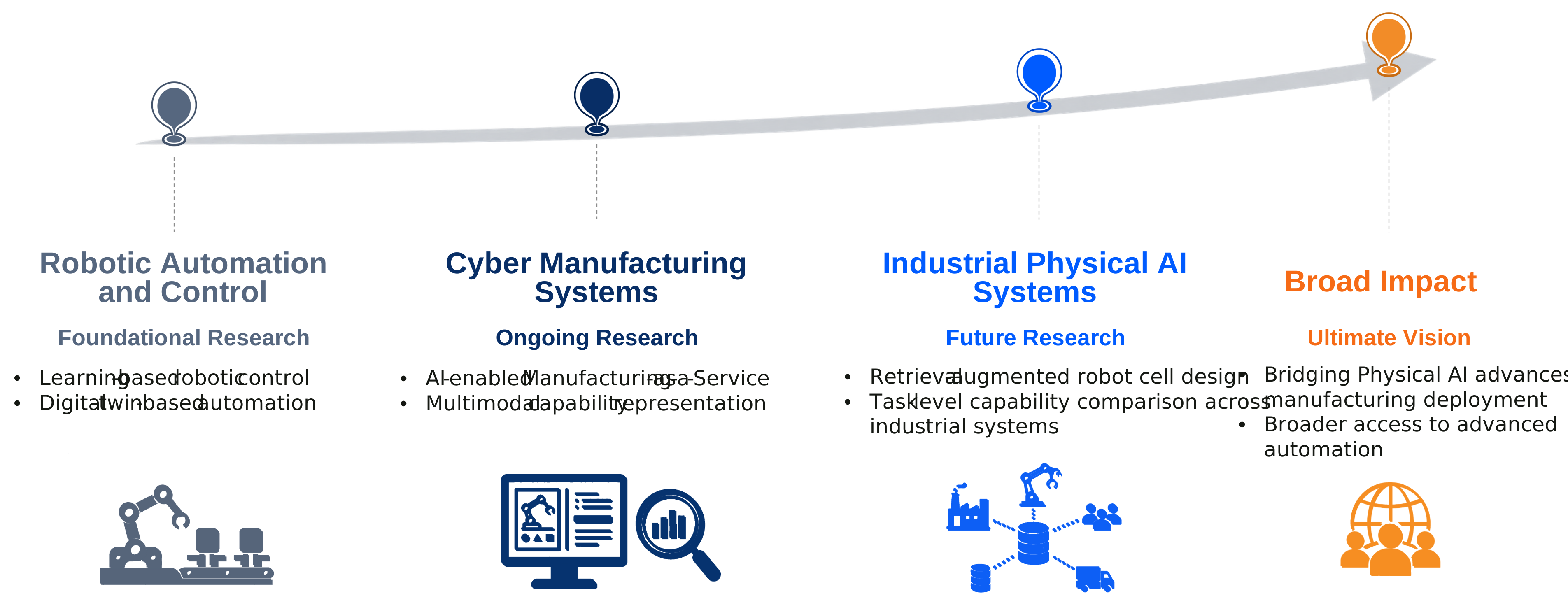
Research roadmap from robotic automation and control through cyber manufacturing systems to Industrial Physical AI systems and broader manufacturing impact
01

Robotic Automation and Digital Twins

Methods that combine digital twins, learning-based control, and physical implementation to automate robotic tasks under constrained environments and changing system conditions.

Learning-based robotic controlDigital-twin-based automationPhysical validation
02

Cyber Manufacturing Systems

Methods that connect manufacturing requirements with supplier production records to identify suitable resources, allocate production, and respond to disruptions.

AI-enabled Manufacturing-as-a-ServiceMultimodal capability representationCapability-aware production allocation
03

Industrial Physical AI Systems

Methods to assess and compare the task-level capabilities of AI-enabled manufacturing systems, from robotics to inspection and process control, and guide their deployment.

Retrieval-augmented robot cell designExecution-based capability assessmentTask-level capability comparison